Scott Berkun recently appeared on the Design Better podcast to chat about the frustrations that designers have working in big companies and how to solve them. I certainly relate to a lot of those frustrations, so picked up Scott and Bryan Zug’s new book Why Design is Hard and devoured it in a couple sittings.
The book goes into more detail on how you can leverage the structure of companies to promote good design. There are a healthy number of candid truths in there about how our egos can get in the way too. It’s the stuff that traditional design courses don’t teach, but that you can’t be a successful designer without.
At just over 100 pages, it’s a quick read. I recommend picking up a copy.
I shared some thoughts over on automattic.design about how I use sketching to communicate ideas in my day job working on WordPress.com.
While design tools like Figma make it easy to assemble polished mockups using a design system, high fidelity can sometimes work against you—making ideas feel too refined, and limiting open-ended feedback. Sketching, on the other hand, invites collaboration. A rough, hand-drawn sketch feels more flexible, encourages broader discussion, and often leads to new and unexpected ideas. Here’s how I use sketching to communicate design ideas when working on products at Automattic. Read more
I recently came across an old speech in the rams foundation archive where Dieter Rams talks about how designers contribute to the success of a company. I’m not sure if this speech came before or after Rams formulated his famous Ten Principles of Good Design, but you see many of the same themes coming through in his words.
This definition of product design stood out to me:
Product design is the organisation of the total configuration of a product (form, surface, colour, labeling) what we term in German overall “Gestalt”—namely the way in which the product fulfils most efficiently the intended purpose. Moreover, at the same time, its overall design should meet the physical requirements and conditions under which the product is manufactured and launched on the market.
A designer who wants to fulfil this task may not conceive himself as an artist who is merely dressing up the product by providing the last-minute garment tailored to the aesthetic criteria of taste.
We could rather say the designer is a Gestalt-engineer. From the various elements—predetermined requirements and specifications provided by engineering, production, marketing etc.—he synthesized the concrete product. His work is largely rational, meaning that the formal decisions are rationalizable, verifiable and ultimately logically conclusive.
This speech was given sometime around 1975. I was fortunate to see Dieter Rams at the opening of Vitsœ’s new London store in 2019. In his remarks that day, Rams continued to press for the importance of designing for the whole and not just aesthetics.
Today more than ever, the world needs Gestalt-engineers.
I love bookshops. The old kind are the best. Packed with books in every available nook. Floor to ceiling stacks of all the genres you could imagine. I can lose hours browsing the shelves.
Sometimes I don’t have the time to spare though. I just want to pop in and pick up something quickly, but finding a particular book can be challenging. Yes, there are various ways of organising books to help people find what they’re looking for, but things get move around. It’s tricky to scan the text on spines given that it’s sideways.
It occurred to me that this would be an interesting use of Augment Reality (AR) and Optical Character Recognition (OCR). Just scan your phone along the stacks and an app can highlight the book you’re looking for. Computers can almost definitely find the book quicker than a human could. Besides Apple provides all the APIs needed to identify things shaped like books, read the text from the spines, and highlight the correct book in 3D space using AR.
I played around with what the UI for an app like this could look like. Who knows if I’ll ever build it, but it was a fun experiment.
I was in the capital for the start of the London Design Festival yesterday. As I walked up Princes Gate from the V&A I realised how many different typefaces I was surround by. These images capture some of the typefaces I came across as I moved through the city.
The past few weeks I’ve been working on a project that just didn’t seem to turn out right. Despite three major design iterations and a thousand smaller explorations, I wasn’t happy with the result.
Sometimes this happens. It would be oh so easy to draw a line under it and move on. There’s always more work to do. But it eats away at me. Like a master cabinetmaker who finishes the back of the drawer for nobody’s satisfaction but their own, I couldn’t help feeling I could have done a better job. I ended up spending the time to refine the design, because just fine, just isn’t fine.
Does this make me a perfectionist? Probably.
Does it reflect a level of care for the people who will use this product? Absolutely.
In the rush to always be shipping it’s easy to let quality slide. It starts in the small details. Then all at once everything seems broken.
Give a damn. It’s the best defence we have against mediocrity.
To kick things off I flew out to Munich, Germany 🇩🇪 for the annual WordPress.com division meetup—how about that timing! It was a little overwhelming to begin with, but ended up being the perfect way to start.
Working remotely makes it harder to get to know the folks you work with. So Munich was great opportunity for me to hang out with the WordPress.com design team and get to know the engineering teams I’ll be working with a bit.
After getting a glimpse of what’s planned for WordPress.com, I’m fired up and ready to get stuck in.
I stumbled across this documentary about Sebastian Cox and his mission to prove that sustainably sourced British woods can be used to create wonderful furniture.
Against The Grain – Documentary Film About Furniture Maker Sebastian Cox
Something that particularly resonated with me was how the craftspeople in his workshop are responsible for realising a product from start to finish. There’s no division of labour. Forcing people to develop their craft in a wide range of areas from preparing the wood and assembly, to final finish.
Sebastian refers to this principle of having people owning the whole process, as being derived from William Morris’ view of how mass production diminished craft skills during the Industrial Revolution.
It made me think about how fragmented a lot of product teams have become when building software. It’s rare to have a single persons that owns a whole feature. Things get divided up into design/engineering, frontend/backend, mobile/web. The division of labour is very present.
There are many good reasons for these divisions of course. But it’s a reflection of how the software industry is very much in the mass production phase of development.
I’ve often considered how the lack of ownership over the whole is reflected in the end quality of a feature or product. It’s possible to build great products this way, but I can’t help feeling that something is lost.
Helen West (a.k.a. my Mum) has run a jewellery business for my entire life. She designs and makes individual pieces and sells them through her retail store. If you were to visit her workshop you’d find a wonderful array of tools and machines, but she didn’t decide to become a designer so that she could bend metal or hammer intricate patterns into a piece of silver all day. Helen’s a jeweller because she wants to express her creative ideas in the pieces she makes. Her satisfaction is not found in the swing of a hammer, but in the creation of an object that brings joy to it’s owner.
That said, Helen has a deep understanding of her tools. It’s a requirement in order to bring her ideas to life. She needs to know which set of pliers to use to bend the metal in just the right way, or which technique will allow her to create the finish she’s after.
I think the relationship between design and coding is very similar.
Code is merely the tool I use to bring my ideas to life. I don’t draw pleasure out of writing code all day. My satisfaction is found in designing and building something that’s more useful than that which came before it.
Not all designers want to bring their designs to life themselves. That’s okay. It doesn’t make them a “bad” designer, they just need to find someone they can trust to do that for them.
I’ve worked with some excellent designers that don’t code. I sometimes wonder if the absence of coding skills actually frees these designers to create more innovative products. Due to their limited knowledge about todays tools, they are not constrained by their limitations. They often create designs that force our tools to evolve. Of course, designers that code can do this too, it just take a little more conscious effort to break free of these constraints.
So should designers code?
Learning to code is a necessity if you want to bring your designs to life yourself. If you work with a great developer who you trust to respect your design decisions, it’s okay to delegate the coding to them.
Some jewellers design and make everything themselves, others hand off their designs to skilled craftspeople who bring those designs to life. Either approach is okay, it just depends on how you want to work.
Caveat: When I talk about coding in relation to the “should designers code?” question, I’m referring to interface design and frontend development (HTML, CSS, and JavaScript). Software engineering and backend development are specialised fields that I don’t think every designer needs to understand in depth.
Web forms are the evolution of their paper counterparts. A collection of labels, boxes and circles designed to constrain input and make it easier for data to be processed.
After all, a forms purpose is to collect data so an operation can be performed. To perform that operation the data we collect needs to be uniform. We place constraints on the interface to ensure this uniformity. Forms are designed to meet the needs of the process, not the user.
Forms often feel cold, inhuman. As a result, our responses are often cold and inhuman too. We leave out details. Things we might have mentioned if asked the same question by a friend, but this is a computer. All it wants is data. It doesn’t care. It’s like talking to someone that isn’t listening to you. Why bother when your words are not heard?
As with many digital things, forms have been heavily influenced by their analog predecessors. We have square boxes for writing in because that’s what we had on paper.
Paper, a form factor where the primary input method was a pen or pencil. Things have changed, yet we allow ourselves to be confined by the same constraints put in place hundreds of years ago.
Technology has freed us from these constraints. We’ve been given the tools to create more human interactions between people and computers.
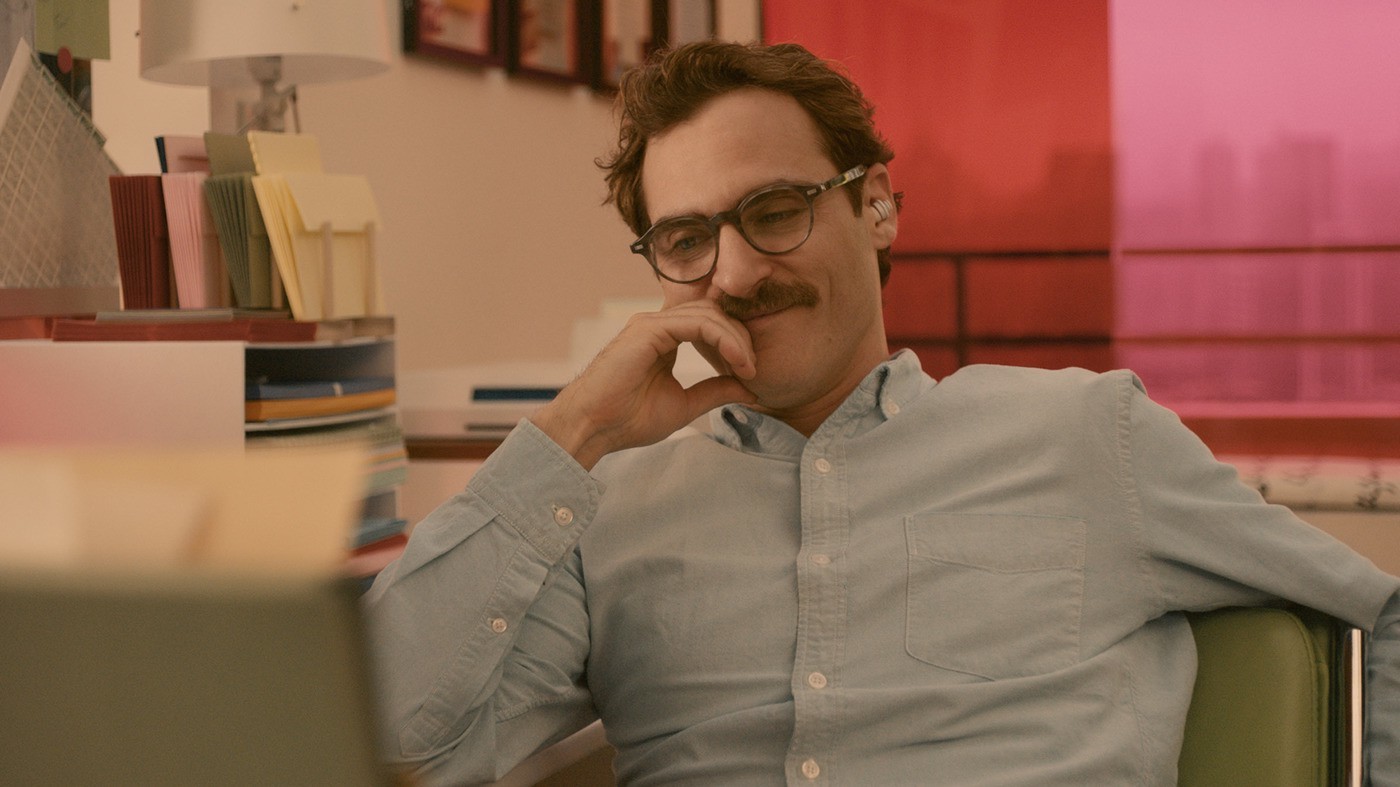
Spike Jonze’s film “Her” provides an interesting prediction for how we might interact with computers in the future.
We are rapidly approaching a time when speech recognition, natural language processing and artificial intelligence are at a level for humans to hold meaningful conversations with technology. Even now, our tools are good enough to start building some of these experiences.
So I bring you back to forms. How can we use these tools to make forms more human?
We need to break away from our preconceived notions of what defines a form interface. To focus on building a more natural experience and using technology to mask, not remove, the constraints needed to perform operations.
A conversation with Facebooks chat bot “Poncho”.
Over the past few years we’ve seen the introduction of a bunch of new products that aim to make our interactions with technology more natural. Siri, Alexa, chat bots, these are all moving us in the right direction but we’re yet to see these innovations bleed into the browser viewport in a significant way.
There’s so much potential for more conversational interfaces on the web and yet we still default to building forms out of a bunch of inputs and dropdowns when we need to collect data.
Some people are pushing forward with this. The insurance service Jack, recently launched with an impressive page for collecting the details needed to provide an insurance quote.
While the responses are still constrained, the design of the data collection process creates a much more enjoyable and friendly experience.
It would have been easier to just present the user with a standard web form, but by making the interaction with the user more like a conversation, Jack have managed to create something that feels far more natural.
Adrian Zumbrunnen’s conversations website azumbrunnen.me
Adrian Zumbrunnen captured the webs attention a while back when he released his conversational personal site. Adrian designed an interface that uses a selection of canned responses to guide the user on a tour of his work in the UI/UX field. Cleverly, Adrian’s website takes into account how the user reached his site and uses this as a signal to understand the user’s context.
We’re moving in the right direction but it still feels like something is missing. To build a truly conversational interface the technology needs to have an understanding of the user’s intention and context that goes beyond canned responses and cleverly positioned text fields. We need to build on the work done in the chat bot space and develop interfaces that people can interact with using natural language.
The interface should know who we are before we even start. The fundamental technology is already there for this. It’s called browser autofill. All of your details saved in one place, made accessible to a website with a simple request.
The interface should adapt itself based on the context of the situation. Did you start a conversation from the support page of a website or the homepage of the marketing site? These signals can help us to understand the user’s context and therefore tailor the systems responses appropriately. This is something that Adrian’s website does well.
Let’s experiment with how we might replace a sign up form with something more conversational.
What would the sign up flow look like if we moved beyond forms?
We have the data to do this today, but bringing it all together to create such a natural experience is really hard.
Consider the implications for accessibility, privacy, multi-language support, emotional and compassionate design. These are all challenges we need to overcome if we’re going to introduce a new era of more meaningful interactions with technology.
We’ve made incredibly progress so far but there’s still more work to be done. The future is just around the corner, but only if we’re brave enough to create it.
It’s important to remember that measured performance and perceived performance do not always align. The brain is a strange organ that has a habit of distorting the reality around us.
In his book High Performance Browser Networking, Ilya Grigorik sets out some guidelines for the humans’ perception of speed. Keep these in mind when performance testing your websites.
Every now and then I read, hear, or watch something that resonates with me so much I just want to share it with the world. Today that moment came after watching Enrique Peñalosa’s TED talk on urban planning and public transport.
Urban planning isn’t one of those sexy design niches that gets talked about all that much (yes, urban planning is design). Talking about grey asphalt and concrete buildings just doesn’t illicit the same intrigue within most people as the smooth anodised aluminium finishes on the latest Apple products. I’ve always been fascinated with cities though. I grew up in the countryside, so visiting a city was always a bit of a culture shock. It’s a completely different world.
I’m fascinated with the layout of cities. The way that roads form a maze between the tall buildings. How the placement of shopping malls, markets, and green spaces can totally change the character of an urban environment. But the thing that hits me most when I visit a city is the divide between rich and poor.
Cities are places of extremes. They are the centres of extraordinary wealth, but also crippling poverty. Cities are where our democratically-elected governments call home. Why is it then that their design often seems far from democratic?
In his talk Enrique Peñalosa speaks of his time as the mayor of Bogota, Colombia. Becoming the mayor of a rapidly expanding city cannot be an easy job. These cities face many problems; crime, poverty, vast informal settlements that come to define the landscape of the environment. Many of us in such a situation of leadership would feel so overwhelmed by the task-at-hand we would be powerless but to prod at the issues with short-term solutions.
Enrique Peñalosa however, recognised that this rapidly growing city had the opportunity to reinvent itself. An opportunity to become a more democratic city. A city that restored dignity to its poorest citizens. A city that empowered it’s citizens to dream.
Enrique Peñalosa spearheaded initiatives like [TransMilenio], a networked bus system comprising of over 130 stations that enables citizens to move around the city quickly and safely. The buses have their own dedicated lanes so as to avoid the busy city traffic. No doubt a controversial decision amongst motorists, but one that Enrique Peñalosa defends as restoring a basic human right set out in the constitution.
The first article in every constitution states that all citizens are equal before the law. That is not just poetry. It’s a very powerful principle. For example, if that is true, a bus with 80 passengers has a right to 80 times more road space than a car with one.
– Enrique Peñalosa
The automobile revolution redefined our cities. It reinforced the divide between rich and poor; opportunity and poverty. Now it’s the bus lanes, cycle ways, and pavements that are restoring equality.
An advanced city is not one where even the poor use cars, but rather one where even the rich use public transport.
– Enrique Peñalosa
So take 15 minutes out of your day and watch Enrique Peñalosa’s TED talk. It might just change the way you look at cities.
The cities we are going to build over the next 50 years will determine quality of life and even happiness for billions of people towards the future. What a fantastic opportunity for leaders and many young leaders to come, especially in the developing countries. They can create a much happier life for billions towards the future. I am sure, I am optimistic, that they will make cities better than our most ambitious dreams.