Blog

  • Notifications Rule Our Lives

    No matter where we go these days our phones are always with us. They keep us in touch with the wider world.

    I feel like my brain has an invisible connection to the internet. In a way the internet is just an extension of our minds. We can find out about pretty much anything that takes our interest with just a few taps on a screen.

    Always being connected does have it’s downsides though. Our concentration is constantly being interrupted by notifications. You hear that characteristic buzzing sound and instinctively look at your phone. We don’t even have to think about it anymore. It’s become a reflex.

    Why do we let notifications rule our lives like this?

    Many people have a fear of missing out. They need to know about everything. Every blog post. Every email. Every drunken picture posted to their friends facebook page. But what if we just turned it all off? Would we really miss out on anything? What if we cut out all the noise and just made things simple again.

    A few months ago I did exactly that. I was finding it hard to concentrate under the constant bombardment of notifications. A lot of which really weren’t that important. So I just turned them all off, and it feels great. I’ve got my productivity back

    I think a lot of app developers add notifications without really considering what impact they will have on their users. Sure, it’s a great way of reminding someone that your app exists but is the information really so important that the user needs to know right this minute. Could it not wait until the next time the user opens the app?

    Over time I’ve turned a few things back on. I get notifications for messages that hit my priority inbox in gmail now, but most other apps remain muted. I feel liberated. Finally I can focus on my work without being constantly interrupted.

    If you suffer from this problem too, try turning off all the notifications on your phone for a week. You won’t be missing out on much.

  • The Story of My First Business

    When I was 17 I started my first “real” business. I was in my first year of sixth form and was working part-time in a computer store fixing virus-infected PCs. The store sold all kinds of computer-related items, but it had no real online presence. No ecommerce store. Not even a simple website. The store owner was a really nice guy and we got on well but it baffled me how he could miss such a big opportunity.

    I figured that I could setup my own online store and run it on the side whilst I finished school. Maybe I would even make enough money to leave the computer store. So I went out and set up accounts with all of the companies that supplied the store. I had about £100 to buy some stock so I started small, buying cheaper items with the hope that I could find some that would be popular and then double down on those.

    I worked flat-out through the easter holidays and setup a simple website to sell the stock. I probably should have been revising for the business exam that I had coming up, but I figured that actually building a business was going to be way more useful than staring at textbooks. Turns out I flunked that exam.

    As well as the website, I started listing the items on eBay. I didn’t know anything about marketing or sales but eBay seemed like a logical choice. The customers were already there, I just needed to convince them to buy from me rather than my competitors. Maybe I could even persuade previous customers to come back and buy something from my website, cutting out the eBay listing fees.

    I bought a second-hand blackberry and setup a Skype number so that the business looked more professional. I remember calling up suppliers during lunch breaks and between lessons to place orders. It was way more interesting than the majority of my school work.

    One day we had a guest speaker come in and talk to our business class about how he had started a business from nothing. The speakers name was Edd Smith, founder of Dreadworx. Up until then my business had mainly been a hobby. I did it because I enjoyed what I was doing. I never thought that it would amount to anything. Edd changed my whole perception on business. He gave me the best business advice I’ve ever received, and showed me that it was possible to take something you love and make it your full-time job.

    I ran my computer business for the majority of the time I was in sixth form. The business had grown steadily and it was profitable. I wasn’t going to be overtaking PC World in market share any time soon but I loved the feeling of making a sale. That business taught me a lot, and I made a lot of mistakes. The biggest thing I learned was that with a bit of hard work (and a little bit of luck) you can build something from nothing.

  • The Best Business Advice I’ve Ever Received

    Today I wanted to share with you some advice that I received when I was 17. It was given to me by Edd Smith. At the time Edd was running a company called Dreadworx that was one of the countries largest sellers of dreadlock products. He now runs a creative agency called Purple Claw.

    This email changed my whole outlook on business and gave me the confidence to go out and start a company. I hope that it’s as useful for you as it has been for me.

    When you get home and you think about the computer idea, ignore what your family think, ignore what your friends think, ignore what your teachers think and ignore the negative thoughts in your head telling you not to do it. If you know you can sell computer parts (and as long as you don’t get yourself into massive debt!) then you should and at the end of your time in sixth form you can think ”˜hey it was fun but I’ve had enough of that and am going to uni’ (with I might add a fantastic addition to the CV) or you might think ”˜this is going really well I could make a living from this’. All that matters is your own self belief in your ability to sell products and don’t let anything or anyone else let you wonder otherwise. Work hard, believe in your ability and you will go far.

    Another entreprenuer I met said something along these lines to me once, actually he wrote it on a bit of paper after I gave a business presentation to him as part of the A-Level course – still have it on my pinboard in the kitchen at home.

    “The blind belief of others in your ability is always a boost when even those closest to you don’t always see the opportunity you see” ;o).

  • Measuring The Value of Online Education

    For the past few years I have been watching the revolution that is going on in education with much excitement. A traditional college education is rapidly becoming obsolete as the standard of online courses surpasses that of the courses taught at many institutions. Of course, I am biased. I never went to college. I took the view that there was nothing I would learn at college that I couldn’t teach myself using information that is freely available on the internet. I was probably a bit naive at the time (after all, college isn’t just about the classes) but I stand by the fact that it was one of the best decisions I have ever made.

    Online education does however have some shortcomings. The one that I have been thinking about a lot recently is how we measure the quality of online education. The difference in quality of online courses makes it extremely difficult for employers to effectively gauge the value of online courses when reviewing applicants. Students taking a course from one organisation may get a significantly better education than a student taking a similar course from another institution. This isn’t a new problem, it existed in the traditional college model too, but I think it’s something we need to try to fix.

    Each organisation offering online courses has come up with their own way of measuring a students progress. Be that using a points system, badges, certificates or something else. This works fine within that organisations ecosystem but these grading systems don’t play well with each other. What we need is a standardised system that represents both the quantity of content that a student has consumed as well as the quality of that content.

    This isn’t a trivial issue and I don’t have an answer as of yet, but it’s something I’ve spent considerable time thinking about. If you have any ideas that you’d like to share please reach out on twitter or in the comments below.

  • There’s No Script

    Yesterday I watched Dick Costolo’s commencement speech that he gave to graduating students at the University of Michigan. Aside from being very entertaining (mainly due to Dick’s style of comic delivery), there were a few key messages that really hit home. The one that had the biggest impact was the following.

    Don’t always worry about what you’re next line is supposed to be, what you’re supposed to do next. There’s no script. Live your life.

    Nobody can know for sure what will happen in the future. Attempting to plan the path is mere speculation. After all, life is just one big improv.

    The key is to jump at opportunities as they present themselves. The most interesting times in my life have all started with that strange mix of fear and excitement that comes with agreeing to do something that pushes you far out of your comfort zone.

  • New Adventures: The Final Chapter

    The past two years I have been lucky enough to attend New Adventures in Web Design at the Albert Hall in Nottingham. It’s my favourite conference (sorry Andy, Build is a close second). The atmosphere at New Adventures is so welcoming and supportive that there is no place I would rather spend my time. To me it feels like home.

    Every year the speakers are fantastic, and this year was no exception. The talks from Jason Santa Maria, Tyler Mincey, Michael Heilemann, Tiago Pedras, Jon Tan, Seb Lee-Delisle, Stephanie Troeth, Wayne Hemmingway and Jessica Hische were mind blowing. I mean truly out-of-this-world insanely great. I’m still recovering from the mental hangover that comes with absorbing so much knowledge in such a short period of time.

    This year New Adventures wowed the industry for the final time. I’m unsure how I will cope entering 2014 without the burst of inspiration that New Adventures has so consistently provided. The inspiration that I have come to rely on.

    Simon Collison and Greg Wood are geniuses for putting together such an amazing event. They have worked tirelessly to keep the event accessible to everyone within the industry. Whilst at the same time crafting an experience fit for royalty. I’m so thankful to Simon and Greg for putting this conference together, and to everyone else that has been involved through the years. You have given me memories I will cherish forever.

  • Protecting Our Freedom

    As I was reading through the latest edition of Businessweek yesterday morning I came across an Obituary on Aaron Swartz. I never knew Aaron, but like millions of others I felt the effects of his work. There was one passage in the obituary that really resonated with me. It describes the state of the internet as it is now.

    “This is the tension at the heart of the Internet: whether to own or to make. You can own a site or a program – Apple’s iTunes, Microsoft Word, Facebook, Twitter – but you can’t own a language. Yet the languages make sites and programs useful and possible. You make the Internet work by making languages universal and free; you make money from the Internet by closing off bits of it and charging to get in. There’s certainly nothing wrong with making money, but without the innovations of complicated, brilliant people like Swartz, no one would be making money at all.” Brendan Greeley

    Does it have to be a choice between open and closed? Between an internet where users are free to act under their own will; or one where their actions are dictated and controlled. It’s clear which internet Aaron Swartz wanted. He fought hard to repel attempts at censorship so that knowledge can flow freely to those that wish to acquire it.

    It is easy to take our freedom for granted. To forget that it was our forefathers that fought to give it to us. Today we face a new challenge. We must persist in our fight to protect an open and free internet. For if we lose the battle, we lose the single greatest resource humanity has ever had.

  • Lessons Learned: Teams and Failure

    Lessons Learned: Teams and Failure

    In late December I left a company that I had spent over a year helping to build. It wasn’t easy to leave but the whole experience has taught me a lot. I thought I would note down some of the lessons that I have learned for the benefit of others in a similar position.

    #1: Consider Your Motivation

    Passion was probably the single biggest issue that I battled with. If truth be told I never really believed in what we were doing, ultimately that is what lead to my departure. I got involved because a friend (and an ex-boss) asked for my help and I didn’t have the heart to say no. The lack of passion for the goal meant that at times I just simply didn’t want to be involved. If you’re passionate about something you can power through any roadblock; if you’re not, it’s easy to quit.

    Passion is everything. If you’re not passionate about the mission don’t waste your time.

    Lesson learned.

    #2: Fail Fast, Learn Faster

    Whenever you undertake something that you’ve never done before you are going to make mistakes. The trick is to identify them quickly and act on what you have learned. Failure is an option; as long as you don’t fail at the same thing repeatedly. Then it’s not failure, it’s stupidity.

    We didn’t learn from our mistakes quickly enough and it hindered the progress of the whole business. I didn’t learn from my failure of passion, and it cost me.

    Identify your mistakes quickly and act on them straight away.

    Lesson learned.

    #3: Pick Your CoFounders Carefully

    The most important thing in a business is the people. If the mix isn’t right from the start you’re basically screwed. Good enough doesn’t cut it. You need exceptional cofounders that can pull their weight.

    Are you prepared to ride the startup roller-coaster with these people? Is this the right team to get the job done?

    Lesson learned.

    #4: Set Clear Roles and Expectations

    This follows on from lesson #3. Make sure that you outline clear roles for everyone from the start. If you don’t, things can get messy quickly. People tend to work best when you give them ownership over a particular part of the business. (If you have a small team there may be some overlap.) Over time people’s roles will emerge but it’s best to be clear from the get go.

    It’s not always realistic for everyone in the team to put in the same amount of work. This is probably the single biggest issue that causes conflict between cofounders. Explicitly define the expectations of each individual in your team. If this is done from the start you can eliminate any issues emerging from the felling that someone is ‘not pulling their weight’.

    Lesson learned.

    #5: Be Prepared To Let Go

    Starting a company is difficult. It takes a lot of hard work. For this reason it can be incredibly hard to let go and accept that the business isn’t working. I’m a big believer in hanging in there when times get tough, but I also think that there is a fine line between persistence and insanity. If all the signs are telling you something isn’t working it’s okay to abandon the original plan or admit defeat and move on. Failure is an option, as long as you learn from it.

    I’ve seen people waste days trying to justify a few hours they spent working on something in the past. Don’t be afraid to admit defeat and let go.

    Lesson learned.

    The team I was working with is continuing on with the business so I have intentionally not mentioned its name out of respect. I wish them all the best with their continued journey. I hope they prove me wrong.

  • Creating Physical Products

    Creating Physical Products

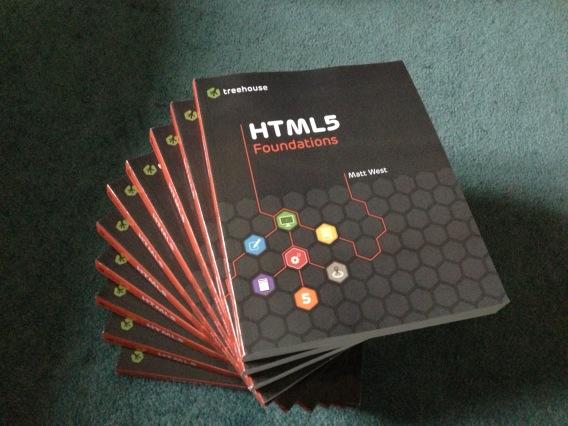
    Almost everything that I work on is a digital product. No matter how much time I spend pondering over the finer details of a design or planning out complex data structures I can never physically touch these things. They live in my computer screen. Today I got some copies of my book through from Wiley. Holding this book in my hands for the first time has made me realise how different it is to create a physical product.

    I have a tendency to ship digital products early. If I have a new idea or a bug gets discovered I can quickly push an update and all is well. The iteration loop for digital products is pretty tight and it gives us web folk a lot of freedom.

    This luxury is not available when it comes to physical products. A lot of the time you get just one chance to get it right. If you screw up, it lasts forever. You don’t have the ability to just push a quick update to fix a typo that has been printed in thousands of books (luckily I haven’t found one yet, but I’m sure I will). The pressure that this creates can be a little overwhelming; but at the same time I feel that it pushed me to do better work.

    I really like the feeling of being able to hold in my hands something that I’ve worked on for so long. Digital is great, but it’s really no substitute for physical product.

  • The Ben & Fitz Show: Essential Viewing for Web Developers

    When I was first learning to program I submersed myself in Open Source as a way to improve my coding chops whilst at the same time learning how to work effectively with other programmers. This was mainly down to the influence of two developers, turned managers at Google. Brian Fitzpatrick (“Fitz”) and Ben Collins-Sussman.

    Ben and Fitz have strong roots in the Open Source community and worked on the team that brought Subversion into the world.

    Over the past 5 years Ben and Fitz have given a number of talks about how to effectively manage Open Source projects and how to play well with other developers. Watching these talks on YouTube really inspired me to become a better programmer, and a better team member. Everyone that works on Open Source projects, or just works with other developers in general would really benefit from watching some of theses talks. I’ve put together my favourites here.

    Welcome to the Ben and Fitz show.

    Open Source Projects and Poisonous People

    The Joys of Engineering Leadership

    Do you Believe in the Users?

    The Myth of the Genius Programmer

    Programming Well with Others: Social Skills for Geeks

    The Art of Organizational Manipulation

    Team Geek

    Ben and Fitz recently wrote a book called Team Geek that embodies a lot of what they talk about at conferences. It’s a great read and I would definitely recommend picking up a copy.

  • Introducing HTML5 Foundations

    Introducing HTML5 Foundations

    Back in March I was incredibly lucky to get the chance to pitch a book to one of world’s largest publishers, John Wiley & Sons (For Dummies, Wrox, Blackwell), and one of the leading online education startups, Treehouse. The book was to become one of the very first publications in the new Treehouse series. As you may have already heard, I got the book deal and last week we announced the launch of HTML5 Foundations!

    The aim of HTML5 Foundations is to teach absolute beginners how to create websites using the latest and greatest web technologies like GeoLocation and the Audio and Video APIs. The book takes a comprehensive dive into HTML and also covers basic JavaScript programming skills.

    Writing a book has been an amazing experience and I will be sure to write a more detailed blog post about the journey in the next few weeks.

    HTML5 Foundations is currently available for pre-order at all your favourite bookstores including Amazon, Barnes & Noble, Waterstones, Play.com and The Book Depository. You can find links to all of these stores (and a sample chapter) over on the HTML5 Foundations website.

    The fantastic Ian Lunn has written the CSS3 companion book titled CSS3 Foundations which is also available for pre-order.

  • Don’t Try To Be The Next Steve Jobs

    I was watching an episode of Charlie Rose the other day in which an idea was presented that really resonated with me, so I thought I would pass it on.

    In the episode, Bill Maris and Kevin Rose (both from Google Ventures) were being interviewed when the question was asked: “Who is the next Steve Jobs?”. Now usually when this question is asked a flurry of names get mentioned. Jeff Bezos. Larry Page. Mark Zuckerberg. This time however Bill Maris simply answered by saying that he is not looking for the next Steve Jobs. He is looking for people that are capable of changing the world as Steve Jobs did. People with “a healthy disregard for the impossible”.

    This thought stuck with me.

    Our own personalities are a collection of the traits, ideas and mannerisms that we have picked up from those around us as we have walked the winding (and often complicated) path that is life.

    As children, we learned by copying our parents. As we grow older we continue to copy from those around us and from the people we admire. It’s just part of human nature.

    However it is important not to get too hung up on a single person. We shouldn’t be trying to emulate all of the traits of an individual just because they have been judged as a success. As if to think that by copying their personality we too will be able to enjoy the same success.

    Sorry to burst the bubble folks, but it doesn’t work like that.

    I personally admit to having fallen fowl of copycat syndrome a few times over the past few years. 
    As I’ve learned more about the people I admire, I have tried to merge their personality traits with mine. Sometimes consciously, sometimes not. But it has always essentially led me back to the same conclusion.

    Getting hung up on trying to act like someone you admire just leads you further away from discovering who you really are.

    Don’t try to be the next Steve Jobs, Larry Page or Mark Zuckerberg.

    Just focus on being the next you.

  • The Golden Circle

    I just finished reading ‘Start With Why‘ by Simon Sinek and thought I would just summarise the main idea presented in the book which is called The Golden Circle.

    The Golden Circle is an idea that states that there are three levels of concept behind a company.

    • WHAT describes what the company actually does (making a product).
    • HOW describes how the company does it (their USP).
    • WHY describes the companies greater vision (the reason behind what they do and how they do it).
    The Golden Circle

    In his book Simon Sinek states that his research has found that most companies can easily articulate WHAT they do and HOW they do it but often struggle to communicate the reason that they do it – their WHY. He also states that what makes companies like Apple Inc. different is that they not only understand their WHY but they lead with it in all that they do. From their decisions in product design to their marketing, it is clear that Apple is out to challenge the status quo. This action of leading with their WHY makes Apple stand out because so many other companies do things the other way around. They lead with WHAT they do and use their HOW to persuade people to buy their product.

    Leading with your WHY first makes a connection with the customer. If they relate to and believe in your WHY they are much more likely to buy your products, even if your WHAT and HOW is not quite as good as your competitor’s. Take the iPhone for example. The iPhone is a magnificent piece of engineering but when compared to it’s competitors, if you were to judge devices based solely on their cost and feature-set the iPhone would not come out on top. So why then does Apple sell so many iPhones? It’s because the people that believe in their WHY would prefer to buy from Apple, a company that has values and clear, visible ambitions, rather than a company that they might not no so well. The best bit is that the customer doesn’t always know that this is why they are choosing to buy from one company over another. It’s to do with how the brain works.

    The part of your brain that is responsible for your ‘gut feeling’ is not responsible for communication and therefore if you were to ask someone who has acted on an inner feeling why they purchased a certain device they might not be able to accurately tell you. They may say something like ‘it was cheaper’ or ‘it looked nicer’. It’s kind of like when someone asks you why you love your girlfriend or wife, you know you do but it is hard to put the feeling into words.

    In this post I just wanted to give you a brief overview of the concept of the golden circle but I would definitely recommend reading Start With Why: How Great Leaders Inspire Everyone To Take Action. It could just change the way that you approach decision making for ever. I know that it has had a big impact on me.

    I will leave you with a quote for the book.

    People don’t buy what you do, they buy why you do it.

  • Building Dens

    It’s easy to think that with all the technology that is available today, kids will have a very different experience growing up. This is true. However, there is a view that kids spend all their time in-doors playing on their XBox, missing out on the simple pleasures that exploring their surroundings can bring.

    Yesterday I decided to go for a walk around the village that I grew up in. Curiosity lead me to explore some of the places where we had made dens when we were younger. Me and my friends would spend every minute of the summer holidays building dens, getting covered in mud in the process – and we loved it. We didn’t have just one den but a whole group of dens, joined by the imagination that makes your dreams seem so real when you are young, we called it the “den chain”.

    A den I found whilst exploring.

    As I was walking through a wood near to my old home I stumbled across this (pictured). It was refreshing to find that children today still lust for the same satisfaction of building something within nature. This quite impressive structure reminded me of how we would sit in our dens for hours on end waiting for an imaginary ‘enemy’ to come and fight us for our territory. Of course no enemy ever came, but the strength of our imaginations was never dented.

    As children, our imaginations ran wild with all that surrounded us. Dreaming up elaborate stories of heroes and villains, angels and demons, mystical beings that were never before known to man. As we grow older we lose the ability to let our imaginations guide us. We become guided by what we think we know for certain. No enemy is ever coming, sitting in a den for hours expecting one would be seen as a sign of madness.

    I believe that we need to rediscover our younger imaginations and give them greater freedom to guide us along our path. Let them inspire our work and influence our decisions. With innocence and naivete we can obtain a fresh perspective of something, allowing us to see what so many before us have missed.

    If you have enjoyed this post you may like Travis Schmeisser’s talk from New Adventures this January. You can find the video of his talk here: Travis Schmeisser: We Used To Build Forts

  • Don’t Lose The Hustle

    When you’ve been running a business for a while it’s sometimes easy for people to settle down and merge into the general day-to-day routine of dealing with email and plodding through the task list. The problem is that some people (me included) have the tendency to become too comfortable with this routine, we settle in and slow down. These sorts of clockwork routines will eventually only lead to something dull and uninspiring. No matter how much you love your job, if you sit and do the same thing day-in day-out for months (or even years) your not challenging yourself. You have basically become a glorified production line worker, forever doomed to undertake the same tasks.

    I’m writing this post because I had a shocking realization that I’ve begun to slide into this. It’s been nearly two years since I took on running Developer City full-time and although I love the work I’m doing there, I realized that there’s nothing all that challenging anymore. I’ve definitely settled in and I’ve started to slow down.

    The realization that I have started to settle in to a routine that could quite easily consume many years of my life has unsettled me. I have always been one to try and push the boundaries and to learn new things, and in a way I am still like that, but I feel that I have been poorly managing my most valuable resource, my time. There’s a lot I want to accomplish before my time is up and unfortunately it’s not going to happen in my current environment.

    I think that money has been a big factor in the equation too. I don’t care much for financial wealth and I’m not rich, but as my company has grown the financial constraints that you deal with in the first months and years as a founder has dissipated. In the early days of starting a company money is always the primary concern. I started out with about £500, and out of that I had to furnish an office, pay the first months rent and bills, pay for some hosting and keep my car on the road so that I could get to meetings. I used my TV from home as a monitor so that I wouldn’t have to buy one. Turns out unplugging yourself from TV does wonders, you don’t have to hear the media moaning all the time. It’s sometimes surprising how far you can stretch something when it is a sparse resource. When it is scarce, money has a different value.

    This reminds me of when I was in school and me and my friends would buy our lunch from the canteen each day. When I first started the canteen was reasonably subsidized, to the point that you could pick up a warm meal for about a pound or a filled roll for around 60p. When I would go to school money would take on a new value, in the real world 60p would barely buy you a packet of crisps but in the canteen that would be a hearty ham and salad roll or 3 big cookies. All of a sudden the value of the change in my pocket increased as I walked through those school gates. This taught me that the true value of money depends on the context in which it is used, and in some ways the amount that you have.

    When a resource is scarce you hustle to make it stretch further. I only ever used to drink coffee at the office because I drink it black and it meant that I didn’t have to buy the milk and sugar that I would have if I drank tea. Thinking about this now seems ludicrous, but the extra couple of pounds a week I would save made a real difference. As money starts to become less of an issue your ability (and I guess willingness) to hustle decreases. After all, you’ve worked hard to get where you are, why not buy that nice coffee machine or that new monitor you’ve been looking at. I fell into this trap and I wish I hadn’t. When I look around my office now it saddens me to see just how much I’ve lost the hustle. Now it’s not like I’ve got solid gold figurines lying around or anything but over time I got that coffee machine, and the monitor. Subscription services are the best for catching you off guard, over time they build up and before you know it the services that you have come to rely on are costing you a considerable amount of money each month. Losing the hustle doesn’t happen overnight, it creeps up on you until one day you realise that you’ve settled in and slowed down.

    If I’m honest this article is more for me than it is for anyone else, but maybe it will help someone out there to realise that the level on their hustle meter has been on the slide too. I miss the hustle, it’s my fault it’s gone and I’m sure as hell going to bring it back. For those of you out there that are still hustling away, be wary of the little temptations that will cause you to lose it. Losing the hustle is by no means the end, but it will take you off the express track.

    Moral of the story – keep focused and don’t lose your hustle. Peace 🙂